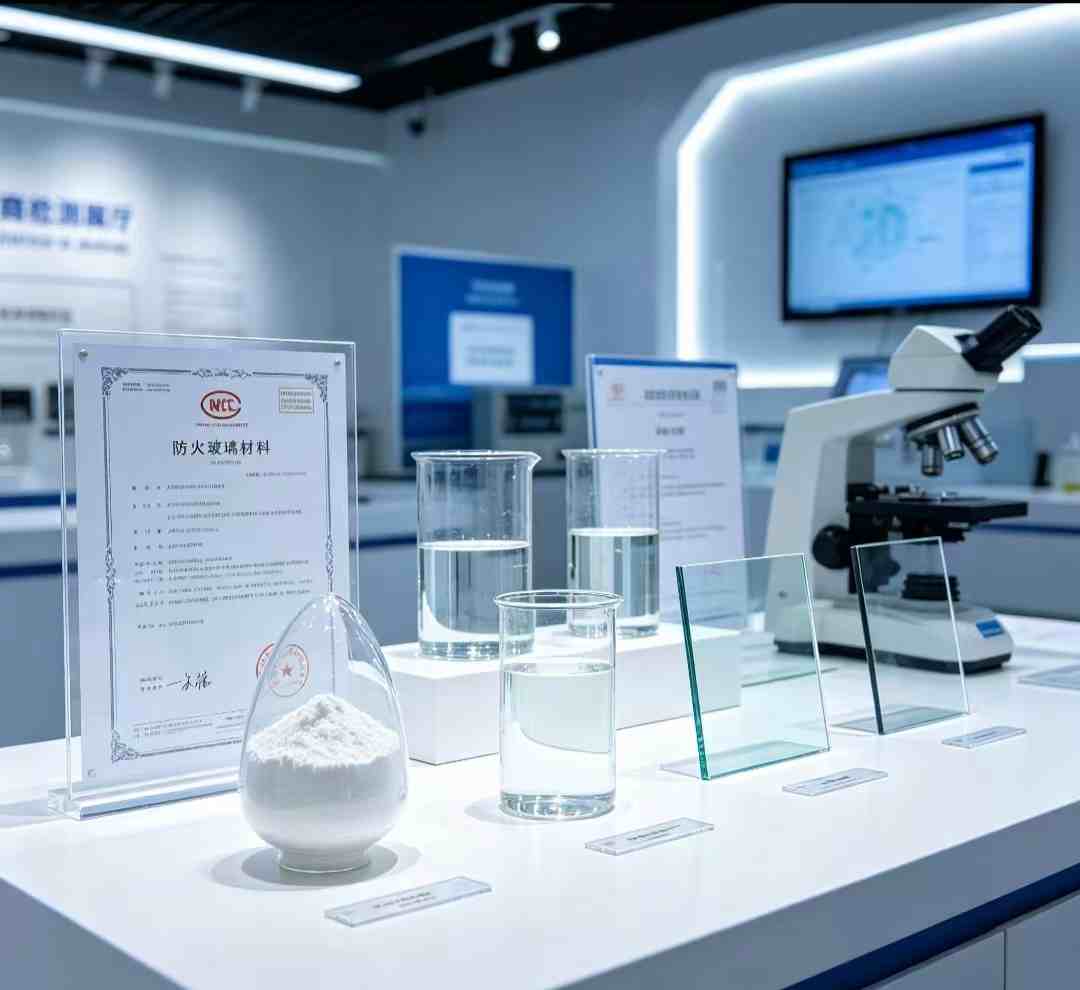
Essential details
Quantity(pieces):10
MOQ:1T
Lead time:15Days
Shipping:sea transportation
Specification Number:ZLLSIL-MF200 Silica Dispersion (Fumed SIlica / Nano SIlica for Fire-Resistant Glass)
Package Description:Woven bag ton bag
Product Introduction
Eco-Friendly Fumed SIlica / Nano SIlica for Fire Glass
Manufacturer: ANDEHU NEW MATERIALS (SHANDONG) CO., LTD
1. Green Product Positioning
As an eco-friendly inorganic fire-resistant material, this Fumed SIlica / Nano SIlica aligns with global green building development trends. It features low environmental impact throughout its life cycle, supports green building certification systems, and contributes to sustainable building solutions.
2. Environmental Performance Advantages
Non-Toxic Inorganic Composition 100% inorganic system based on high-purity silica and deionized water, free of organic resins, plasticizers, halogens and heavy metals. No toxic or harmful substances are released during production, use or combustion, protecting indoor air quality and fire scene evacuation safety.
Low Embodied Carbon Production process adopts clean production technology with low energy consumption; compared with organic fireproof materials, it has lower embodied carbon and contributes to building carbon reduction targets.
Long Service Life & Low Circular Cost Service life of 20~25 years is 3~5 times that of traditional water glass systems, reducing replacement frequency and material waste throughout the building life cycle.
Recyclable Components Cured silica gel layer can be recycled and reused as silicon-based raw material after waste glass treatment, reducing solid waste generation.
3. Support for Green Building Certification
Contributes to LEED (Leadership in Energy and Environmental Design) green building certification points in materials and resources, indoor environmental quality categories
Supports China Green Building Label, BREEAM and other green building assessment systems
Provides environmental product declarations and relevant test data to support certification applications
4. Application in Sustainable Buildings
Green Office Buildings: Matches low-carbon and healthy building concepts, provides fire safety while maintaining indoor environmental quality
Public Welfare Buildings: Non-toxic and smoke-proof properties ensure personnel safety, suitable for schools, hospitals and childcare facilities
Near-Zero Energy Buildings: High thermal insulation performance reduces building energy consumption, complements passive energy saving design
5. Clean Production Commitment
Production bases implement clean production management, with wastewater recycling rate over 90%, no hazardous waste discharge, and comply with national environmental protection standards.
Address: Huaiyin District, Jinan City, Shandong Province, China
Version 10: Technical Comparative Edition | Fumed SIlica / Nano SIlica vs. Sodium Silicate for Fire Glass
Manufacturer: ANDEHU NEW MATERIALS (SHANDONG) CO., LTD
1. Overview
This comparison outlines the technical performance differences between Fumed SIlica / Nano SIlica (nano-silica system) and traditional sodium silicate (water glass) as core materials for grouted fire glass, to support material selection decisions.
2. Core Technical Parameter Comparison
表格
Technical Indicator Fumed SIlica / Nano SIlica (Nano-Silica System) Traditional Sodium Silicate (Water Glass)
Core Composition Amorphous nano-SiO₂ Sodium silicate (Na₂O·nSiO₂)
SiO₂ Purity ≥99.8% ~70~75% (high sodium content)
Na₂O Content ≤0.2% ~10~15%
Appearance Colorless transparent liquid Light blue or colorless, easy to yellow
Cured Layer Transmittance ≥88% 70~80%, easy to whiten
Alkali Efflorescence Risk Extremely low (<1% defect rate) High (8~15% defect rate)
Weather Resistance Excellent (20~25 year service life) Poor (3~5 year service life)
Maximum Fire Rating 3.0h Class A insulation Usually ≤1.5h, unstable
High-Temperature Fumes None, non-toxic Releases alkaline fumes
3. Performance Difference Analysis
Optical Performance: Fumed SIlica / Nano SIlica has refractive index close to glass substrate, with high transparency and no hazing. Sodium silicate easily causes surface whitening and reduced light transmittance due to sodium ion migration.
Durability: Fumed SIlica / Nano SIlica forms a dense three-dimensional silica network after curing, with good UV resistance and aging resistance. Sodium silicate system is prone to yellowing, cracking and peeling under long-term outdoor environment.
Fire Resistance: Fumed SIlica / Nano SIlica forms a stable ceramic layer at high temperature with reliable insulation performance. Sodium silicate has low softening point and poor high-temperature structural stability, making it difficult to achieve high fire resistance ratings stably.
Environmental Safety: Fumed SIlica / Nano SIlica is all-inorganic and non-toxic. Sodium silicate releases alkaline irritant fumes at high temperature, which is harmful to evacuation safety.
4. Comprehensive Cost Comparison
Raw Material Cost: Sodium silicate has lower unit price, but Fumed SIlica / Nano SIlica has lower comprehensive cost due to much lower rework rate and longer service life
Production Cost: Fumed SIlica / Nano SIlica reduces rework, cleaning and maintenance processes, improving overall production efficiency by over 10%
Life Cycle Cost: 5-year total cost of Fumed SIlica / Nano SIlica system is 10%~20% lower than water glass system; 10-year cost advantage is more significant
5. Application Recommendations
For low-end temporary buildings with short service life: Sodium silicate can be considered for cost sensitivity
For commercial buildings, public buildings and exterior curtain walls: Fumed SIlica / Nano SIlica is recommended for reliable performance, low after-sales risk and product grade improvement
For projects pursuing green building certification and high fire safety: Fumed SIlica / Nano SIlica is the preferred technical solution
Address: Huaiyin District, Jinan City, Shandong Province, China
1. Q: What is curtain wall grade Fumed SIlica / Nano SIlica ?
A: An upgraded version with enhanced weather resistance for exterior curtain walls.
2. Q: Can standard grade be used for exterior curtain walls?
A: Not recommended; curtain wall grade has better UV and weather resistance.
3. Q: What is its service life outdoors?
A: Designed for 25+ years under normal conditions.
4. Q: Does it resist UV aging?
A: Yes, ≤2% transmittance loss after 1000h QUV-B test.
5. Q: Does it resist thermal cycling?
A: Withstands -40℃ to 80℃ thermal cycling for 50 cycles without cracking.
6. Q: Is it suitable for coastal areas?
A: Yes, improved water and salt spray resistance.
7. Q: Does it cause efflorescence on edges?
A: Low-sodium formula effectively suppresses alkali efflorescence.
8. Q: Does it yellow after long-term outdoor use?
A: No, anti-yellowing formula maintains clarity.
9. Q: Is it compatible with aluminum frames?
A: Yes, no corrosion or swelling to aluminum profiles.
10. Q: Is it compatible with silicone sealants?
A: Yes, good compatibility with common curtain wall sealants.
11. Q: Which curtain wall systems does it fit?
A: Unitized curtain walls, framed curtain walls and double skin facades.
12. Q: Can it be used for unitized curtain wall prefabrication?
A: Yes, curing speed matches factory assembly line rhythm.
13. Q: Does it meet wind pressure requirements?
A: High bonding strength ensures curtain wall structural safety.
14. Q: What fire rating is available for curtain walls?
A: 1.0h to 3.0h Class A insulating rating.
15. Q: Does it affect facade aesthetics?
A: High transparency preserves original facade design.
16. Q: Is it suitable for super high-rise buildings?
A: Yes, it meets strict fire and structural requirements.
17. Q: Can it be used for double skin facade fire barriers?
A: Yes, it blocks vertical fire spread in the cavity.
18. Q: Does it crack in cold winters?
A: Matched thermal expansion with glass prevents stress cracking.
19. Q: Is on-site pouring possible?
A: Framed curtain wall grade supports on-site gluing.
20. Q: Does it comply with building fire codes?
A: Yes, meets GB/T 15763.1 and relevant international standards.
---
### Group 6: Quality & Stability FAQs
1. Q: How do you ensure consistent quality?
A: Full-process quality control from raw material to finished product.
2. Q: Is each batch tested?
A: Yes, full inspection before delivery with COA provided.
3. Q: What quality system is certified?
A: ISO 9001 quality management system.
4. Q: Will it gel during storage?
A: No, under recommended storage conditions it stays stable for 12+ months.
5. Q: Will it delaminate or precipitate?
A: Charge stabilization technology prevents sedimentation and delamination.
6. Q: Does pH change during storage?
A: It remains stable within the specified range.
7. Q: What happens if it freezes?
A: Freezing may damage colloidal structure; avoid freezing.
8. Q: Does sunlight affect it?
A: Long-term direct sunlight is not recommended; store in shade.
9. Q: Will it grow mold?
A: Fully inorganic formula, no mold growth.
10. Q: Is there batch-to-batch viscosity variation?
A: Variation is strictly controlled within a narrow range.
11. Q: Do you provide third-party test reports?
A: Yes, SGS/BV/TUV test reports are available.
12. Q: Can customers arrange factory inspection?
A: Yes, factory audits are welcome by appointment.
13. Q: Does it meet REACH/RoHS?
A: Yes, compliant with REACH and RoHS standards.
14. Q: Is there a return policy for quality issues?
A: Quality issues are handled per formal quality agreement.
15. Q: How to judge if it has expired?
A: Obvious gelation, delamination or sharp viscosity rise means expiration.
16. Q: Does purity affect optical performance?
A: Yes, higher purity means better clarity and anti-yellowing.
17. Q: Why is narrow particle size distribution important?
A: It ensures uniform curing and consistent optical quality.
18. Q: Is the product traceable?
A: Yes, each batch has a unique number for full traceability.
19. Q: Do you offer stability test data?
A: Yes, accelerated aging and long-term storage data are available.
20. Q: Is the formula fixed?
A: Standard grades are fixed; custom grades can be adjusted.
---
### Group 7: Storage, Packaging & Logistics FAQs
1. Q: What packaging options are available?
A: 25kg drum, 200kg drum, 1000kg IBC tote.
2. Q: What packaging material is used?
A: Food-grade PE / HDPE material.
3. Q: What is the storage temperature?
A: 5–35℃, cool and dry place.
4. Q: Should it be stored sealed?
A: Yes, always seal tightly after use to prevent water evaporation.
5. Q: Can it be stored outdoors?
A: Not recommended; avoid direct sun and freezing.
6. Q: What is the shelf life?
A: Minimum 12 months in original sealed packaging.
7. Q: Can shelf life be extended?
A: Proper storage helps; opened drums should be used soon.
8. Q: Is it dangerous goods?
A: No, it is general cargo, non-hazardous.
9. Q: Can it be shipped by sea?
A: Yes, moisture-proof packaging is standard for sea freight.
10. Q: Is UN packaging available?
A: Yes, UN-certified IBC totes for export.
11. Q: What is the loading quantity per 20ft container?
A: Depends on packaging; details available on request.
12. Q: Can it be shipped in winter?
A: Yes, but avoid freezing during transport.
13. Q: What if it leaks during transport?
A: Rinse with water; it is non-corrosive.
14. Q: Is palletized packaging available?
A: Yes, standard palletized for forklift handling.
15. Q: Can packaging be customized?
A: Yes, custom labeling and package size are supported.
16. Q: How to handle empty drums?
A: Rinse with water before disposal or recycling.
17. Q: Is vacuum packaging needed?
A: No, sealed drum packaging is sufficient.
18. Q: Does it need nitrogen filling?
A: Not required for standard grades.
19. Q: What is the lead time?
A: 7–15 days for standard grades.
20. Q: Can you arrange door-to-door delivery?
A: Yes, multiple trade terms available.
---
### Group 8: Selection & Procurement FAQs
1. Q: Which grade should I choose for 1h fire rating?
A: 30–40% solid content, small-medium particle size.
2. Q: Which grade for 2h fire rating?
A: 40–50% solid content, medium particle size.
3. Q: Which grade for 3h fire rating?
A: 50–55% solid content, large particle size.
4. Q: What grade for exterior curtain walls?
A: Special curtain wall grade with weather resistance.
5. Q: What grade for interior fire doors?
A: Standard 30–40% grade is sufficient and cost-effective.
6. Q: Can I get free samples?
A: Yes, free samples are available for testing.
7. Q: What is the minimum order quantity?
A: 1 ton for standard grades; custom grades negotiable.
8. Q: Can you customize particle size?
A: Yes, within 60–120nm range.
9. Q: Can you customize solid content?
A: Yes, 30–55% customizable.
10. Q: Do you offer OEM/ODM?
A: Yes, OEM and custom formulation services are supported.
11. Q: What documents are provided?
A: COA, MSDS, TDS, certificate of origin, etc.
12. Q: What trade terms do you accept?
A: EXW, FOB Qingdao, CIF, CIP, etc.
13. Q: What payment terms are available?
A: T/T, L/C and other negotiable terms.
14. Q: Do you have stock available?
A: Standard grades are kept in regular stock.
15. Q: Can you supply large projects continuously?
A: Yes, large production capacity supports bulk stable supply.
16. Q: Do you provide technical support?
A: Yes, formulation tuning and on-site support are available.
17. Q: How to request a quote?
A: Contact us with required grade, quantity and destination.
18. Q: Can I visit your factory?
A: Welcome, please make an appointment in advance.
19. Q: Do you have local distributors?
A: Contact us for the latest distributor network.
20. Q: Can we sign an annual supply agreement?
A: Yes, framework agreements for long-term cooperation are welcome.